Why 1509 Basmati Rice Is Popular Among Foodservice Buyers
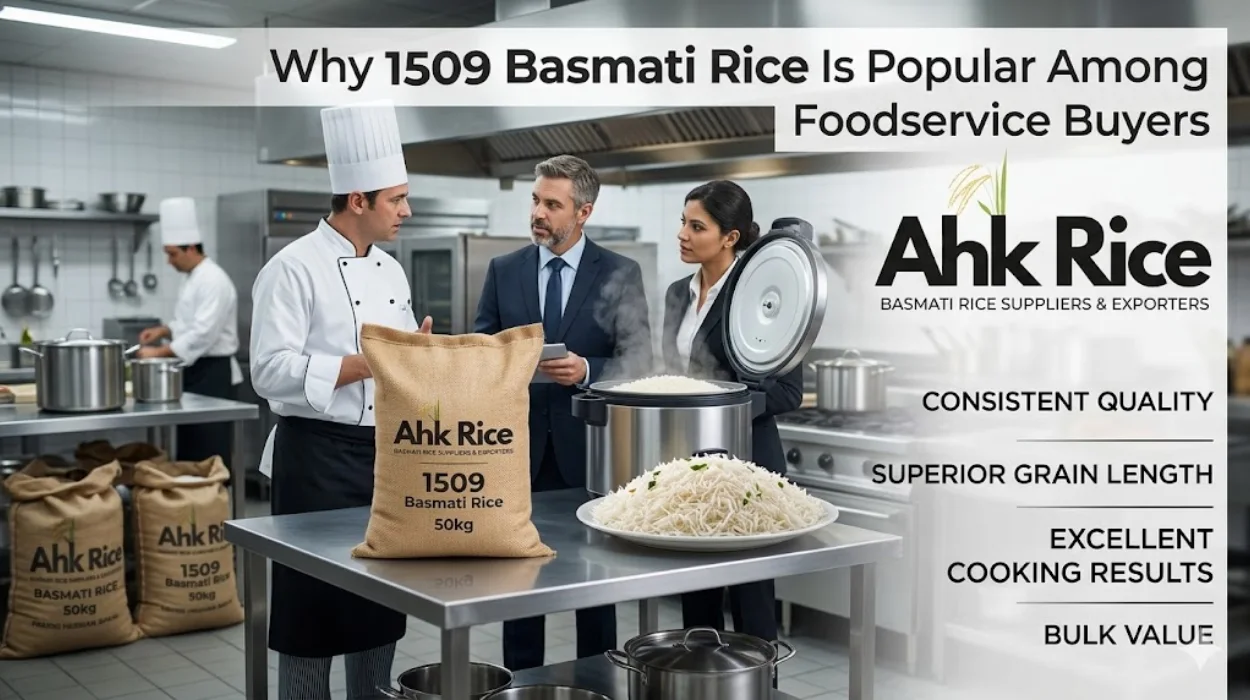
1509 Basmati Rice is popular among foodservice buyers because it combines long grain length, high cooking yield, shorter aging requirements, competitive pricing, and reliable availability. Foodservice operators need consistent performance across large-volume kitchens, and 1509 Basmati delivers that balance at a lower procurement cost than premium aged Basmati varieties. Here is why: the variety offers excellent grain elongation, efficient cooking economics, stable supply from Pakistan and India, and suitability for restaurants, catering companies, institutional kitchens, and food manufacturers.
Pakistan and India cultivate 1509 Basmati Rice as a high-yield aromatic rice variety. Foodservice procurement teams prioritize cost control, cooking consistency, and inventory management. 1509 Basmati aligns with these requirements better than many traditional Basmati varieties.
The variety has become increasingly important in global rice trade during 2024–2026 because foodservice operators continue to face pressure from ingredient inflation and labor costs. Buyers seek rice that performs consistently without requiring premium pricing.
What Is 1509 Basmati Rice?
1509 Basmati Rice is an extra-long grain aromatic rice variety with grain lengths typically ranging from 8.20 mm to 8.50 mm, faster maturation, high yield potential, and strong cooking performance.
1509 Basmati Rice is a hybrid-derived Basmati variety developed to improve agricultural productivity while maintaining traditional Basmati characteristics. The variety belongs to the Basmati rice category because it possesses aroma, grain elongation, and cooking qualities associated with the Basmati family.
1509 Basmati Rice matures faster than many traditional Basmati varieties. Farmers harvest the crop earlier, which improves annual production efficiency and supports larger export volumes.
Foodservice buyers value predictable procurement cycles. Earlier harvest schedules create more stable supply chains and reduce sourcing disruptions.
Which Grades of 1509 Basmati Rice Are Available?
Several commercial grades exist, including Steam, Sella, Golden Sella, White Rice, Head Rice, and Broken Rice specifications.
Foodservice buyers source different grades according to menu requirements and storage conditions.
1509 Steam Basmati Rice
1509 Steam Basmati Rice undergoes controlled steaming before milling. The process preserves grain appearance while maintaining cooking performance.
1509 Golden Sella Basmati Rice
1509 Golden Sella Basmati Rice undergoes parboiling before milling. The process increases grain strength and improves storage stability.
1509 White Basmati Rice
1509 White Basmati Rice undergoes milling and polishing without parboiling. The grade offers a bright appearance and soft texture.
1509 Broken Rice
1509 Broken Rice contains fragmented grains generated during milling. Food manufacturers use this grade for processed foods, rice flour, and prepared meals.
With the definition of 1509 Basmati established, the next question is how the product moves from farm to export markets.
How Does 1509 Basmati Rice Move From Farm to Foodservice Buyers?
The process includes cultivation, harvesting, drying, cleaning, milling, grading, testing, packaging, certification, and export shipment.
1509 Basmati Rice reaches foodservice buyers through a structured supply chain designed to maintain grain quality and food safety.
How Is 1509 Basmati Rice Cultivated?
Pakistan cultivates 1509 Basmati Rice primarily in Punjab’s rice-growing belt. Major production districts include Gujranwala, Hafizabad, Sheikhupura, Narowal, and Sialkot.
Farmers irrigate fields throughout the growing season. Agronomists monitor crop health and maturity before harvest.
Harvesting occurs when grain moisture reaches suitable levels for storage and milling.
How Is 1509 Basmati Rice Processed?
Nine key processing steps convert harvested paddy into export-ready rice.
- Clean the paddy.
- Dry the grain.
- De-husk the rice.
- Separate husk residues.
- Polish the kernels.
- Grade by size.
- Sort by color.
- Test quality parameters.
- Package for export.
Each stage protects quality specifications required by international buyers.
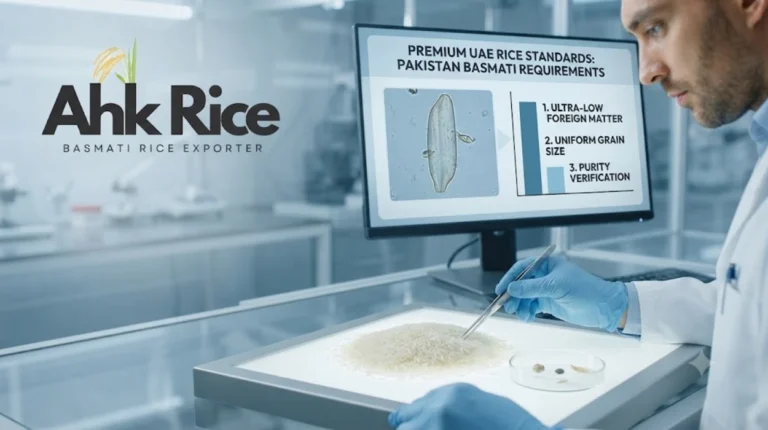
Quality testing includes moisture analysis, grain length verification, purity inspection, and residue compliance checks.
How Is 1509 Basmati Rice Exported?
Exporters load rice into food-grade packaging after inspection. Logistics teams clear customs documentation before dispatch.
Common export documents include:
- Commercial Invoice
- Packing List
- Certificate of Origin
- Phytosanitary Certificate
- Fumigation Certificate
- Bill of Lading
- Quality Inspection Report
Export readiness explains why foodservice buyers trust this variety. The next question examines the specific attributes that drive demand.
What Key Components Make 1509 Basmati Rice Attractive to Foodservice Buyers?
Long grain length, aroma, cooking yield, grain elongation, supply stability, and cost efficiency make 1509 Basmati Rice attractive to commercial kitchens.
Foodservice procurement decisions depend on measurable performance characteristics.
Why Is Grain Length Important?
Raw grain lengths commonly exceed 8.20 mm and cooked grains elongate significantly.
Restaurants value visual presentation. Long grains create premium plate appearance in biryani, pilaf, mandi, kabsa, and buffet applications.
Customers associate long grains with higher quality dining experiences.
Why Does Cooking Yield Matter?
1509 Basmati Rice delivers high cooked volume relative to raw input weight.
Foodservice operators calculate food costs by cooked yield rather than purchase price alone.
A rice variety that produces more servings per kilogram reduces overall menu costs.
Why Is Aroma Important?
Natural Basmati aroma improves sensory quality without requiring additional flavoring ingredients.
Aroma contributes to customer perception and meal satisfaction.
Hotels, banquet halls, and restaurant chains use aromatic rice to enhance premium menu positioning.
Why Is Supply Stability Important?
Large production volumes support consistent export availability throughout the year.
Supply stability reduces procurement risks.
Foodservice operators require uninterrupted inventory because menu consistency depends on reliable ingredient sourcing.
These characteristics explain demand growth. The next section examines operational benefits.
What Benefits Does 1509 Basmati Rice Provide to Foodservice Operations?
Lower procurement costs, strong cooking performance, inventory efficiency, menu flexibility, and supply consistency provide measurable operational advantages.
Foodservice buyers evaluate products according to operational outcomes.
How Does 1509 Basmati Rice Improve Cost Control?
1509 Basmati Rice generally trades below premium aged Basmati categories while maintaining attractive grain characteristics.
Procurement managers compare total meal costs rather than ingredient costs alone. High cooking yield improves serving economics.
How Does It Support Kitchen Efficiency?
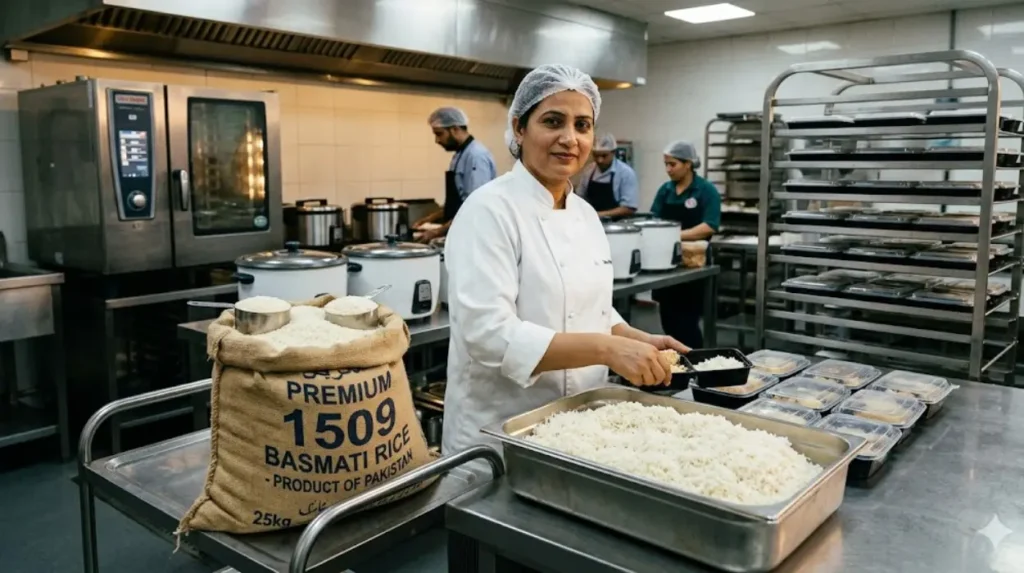
1509 Basmati Rice cooks consistently across batch production systems. Large-scale kitchens require predictable cooking times and repeatable outcomes. Consistency reduces waste and simplifies staff training.
How Does It Support Menu Diversity?
1509 Basmati Rice works across multiple cuisines.
Examples include:
- Biryani
- Kabsa
- Mandi
- Pilaf
- Rice bowls
- Catering platters
Menu flexibility increases procurement efficiency because one rice specification supports several dishes.
Operational benefits explain adoption. The next section explores actual commercial applications.
Where Is 1509 Basmati Rice Commonly Used?
Restaurants, hotels, catering companies, institutional kitchens, airlines, food manufacturers, and wholesale distributors use 1509 Basmati Rice extensively.
Commercial users select rice according to performance requirements.
Why Do Restaurants Use 1509 Basmati Rice?
Restaurants require attractive appearance and cost efficiency. Long grains improve presentation quality. Consistent cooking improves customer experience.
Why Do Catering Companies Use 1509 Basmati Rice?
Catering businesses prepare large meal volumes. High yield improves profitability across weddings, conferences, and events. Stable cooking performance reduces production risks.
Why Do Institutional Buyers Use 1509 Basmati Rice?
Institutional kitchens serve schools, hospitals, military facilities, and corporate cafeterias. Budget management remains a priority. 1509 Basmati provides quality while supporting cost control.
Which Countries Import 1509 Basmati Rice?
Middle Eastern, African, European, North American, and Asian markets import significant volumes of 1509 Basmati Rice.
Key importing regions include:
- Saudi Arabia
- United Arab Emirates
- Qatar
- Oman
- Kuwait
- Iraq
- United Kingdom
- Canada
- United States
- Germany
Pakistan remains one of the world’s major Basmati exporters (source: REAP export data, December 2025).
Use cases demonstrate demand. The next question addresses quality assurance and certification.
What Certifications Apply to 1509 Basmati Rice Exports?
Food safety certifications, quality management certifications, and export compliance documents support international trade requirements.
Certification verifies compliance with buyer specifications.
Which Food Safety Certifications Are Common?
Common certifications include:
- HACCP
- ISO 22000
- FSSC 22000
- Halal Certification
Foodservice distributors often require documented food safety systems before supplier approval.
Which Quality Tests Are Performed?
Quality laboratories test:
- Moisture content
- Grain length
- Purity percentage
- Broken percentage
- Foreign matter
- Residue compliance
Testing protects buyer specifications and shipment consistency.
Certification establishes confidence in product quality. The final section addresses common misconceptions.
What Common Misconceptions Exist About 1509 Basmati Rice?
Many buyers incorrectly assume that lower pricing means lower quality, that all Basmati varieties perform identically, and that grain length alone determines value.
Procurement decisions require understanding performance metrics rather than relying on assumptions.
Is Lower Price Equal to Lower Quality?
No. 1509 Basmati achieves competitive pricing because of higher agricultural productivity and larger harvest volumes. Production efficiency differs from product quality.
Do All Basmati Varieties Perform the Same?
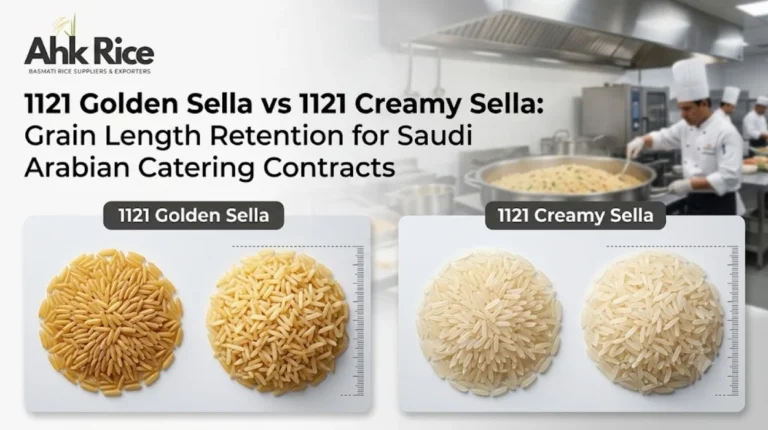
Foodservice buyers rarely evaluate 1509 Basmati Rice in isolation. Procurement teams compare it directly with 1121 Basmati because both varieties serve commercial kitchens, catering companies, and hospitality businesses. The comparison focuses on grain length, cooked elongation, procurement cost, aging requirements, and menu presentation. While 1509 Basmati offers strong value through higher agricultural productivity and competitive pricing, 1121 Basmati is known for its exceptionally long cooked grain appearance. Buyers selecting specifications for biryani, mandi, kabsa, or large-scale catering operations benefit from understanding how these two varieties differ in cost and performance. A detailed breakdown of these differences is available in our guide on comparing popular Basmati specifications for foodservice procurement decisions.
Is Grain Length the Only Important Specification?
No. Foodservice buyers evaluate multiple factors:
- Grain length
- Cooking yield
- Aroma
- Moisture control
- Purity
- Supply stability
- Price consistency
Procurement teams focus on total operational performance rather than a single characteristic.
Understanding these misconceptions completes the picture of why 1509 Basmati Rice has become a preferred choice for commercial foodservice procurement.
Frequently Asked Questions
What is 1509 Basmati Rice used for?
1509 Basmati Rice is used in foodservice operations such as restaurants, hotels, catering companies, and institutional kitchens. It delivers long grain appearance, consistent cooking results, and cost efficiency for large-scale meal production.
How is 1509 Basmati Rice different from 1121 Basmati?
1509 Basmati Rice focuses on higher yield, faster maturity, and lower procurement cost. 1121 Basmati offers longer cooked grain elongation and premium presentation. Foodservice buyers choose based on cost control and menu requirements.
Why is 1509 Basmati Rice popular in restaurants?
1509 Basmati Rice is popular in restaurants because it cooks consistently, maintains aroma, and delivers strong plating appearance. It also reduces ingredient cost per serving, which improves kitchen profitability.
Does 1509 Basmati Rice require long aging?
1509 Basmati Rice does not require long aging like traditional Basmati varieties. It performs well with shorter storage periods, which helps exporters and foodservice buyers manage inventory faster.
Which countries import 1509 Basmati Rice the most?
Major import markets include the UAE, Saudi Arabia, Qatar, Iraq, the UK, Canada, and the USA. These regions use 1509 Basmati Rice for catering, hospitality, and retail food distribution.